
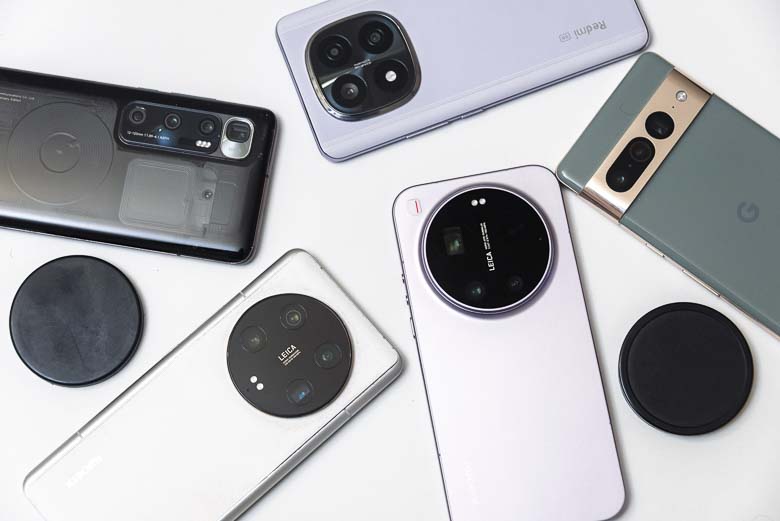
Most smartphones these days have an array of camera lenses and sensors on the back of the phone. It’s rare to see just one camera since we love having the flexibility of multiple focal lengths. However, there’s a lot of diversity in the layout of those camera lenses and sensors. Some companies put them all in a raised rectangular hump like the iPhones do. Some have each lens raised up individually like the Samsung Galaxy Ultra series. Some have a circular raised area on the back that contains all of the lenses and sensors. Which one is the best style? Well, I’ll tell you.
It’s the circular one and here’s why.
Lens caps
All smartphone cameras should have lens caps. I hate it when I or someone else touches the camera lenses and gets some finger grease smears on there that affect the photo quality. My model friends hate it too.
With the Xiaomi 13 Ultra, I realized I could just measure that camera hump circle (It’s 55mm) and then go down to the camera store and get a push-on style lens cap that covers all of those lenses for cheap. No need to buy a special case with sliding doors or flaps like I did with the Xiaomi Mi 10 Ultra or like I see friends doing with their iPhones and Samsung Galaxy devices.
A lens cap for my newest Xiaomi 17 Ultra is only $16 and doesn’t affect the thickness or look of the rest of the phone: Kaiser 57mm Push-On Lens Cap 206957 B&H Photo Video. Meanwhile an iPhone case with a camera lens cap is twice the price and makes the whole thing super ugly. See: Amazon.com: SURITCH for iPhone 17 Pro Case with Camera Control Cover, Camera Cover and Adjustable Kickstand. Having to use a case with a camera cover door with the Xiaomi Mi 10 Ultra was the most annoying since it covered that gorgeous transparent glass body.
You can tell what to look at
Another thing I like about the big circular camera humps on smartphones is that it’s easier for models to figure out where their eyes should go especially when under other bright lights. The big black circular camera hump looks a lot more like a professional camera than the little circles and rectangular arrays on other camera phones.
Conclusion
Ok, in reality the shape of the camera array’s protrusion doesn’t really matter that much. It’s a design and stylistic choice. Maybe it’s the only actual differentiating design feature on all smatphones these days since the other side is always only going to be a rectangular glass touch screen. The only interesting things you can do anymore are change the colors and camera array layout on the back. Maybe someday smartphone designers can get more creative like the Clicks Communicator or the Unihertz Jelly Star.