


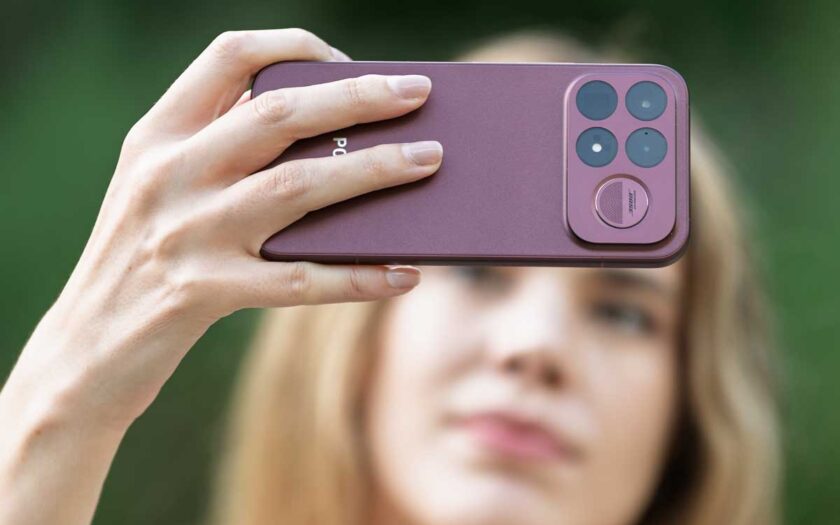
POCO is relatively new to the “ultra” high end smartphone market. It was only last year when they released their first, the POCO F7 Ultra (POCO F7 Ultra Review: The first ultra POCO phone). It was one of the first phones to have the new Qualcomm Snapdragon 8 Elite processor, which was the first time in a long time when smartphone processor speeds had a seriously noticeable speed boost. Today’s POCO F9 Ultra uses the same processor, and is more similar to the F8 Ultra, but also brings some very very welcome upgrades to the cameras and battery capacity which is almost double the average smartphone battery capacity. While the POCO brand is still meant to be “high value”, the POCO F9 Ultra is very much encroaching on the high-end smartphone market.
Table of Contents
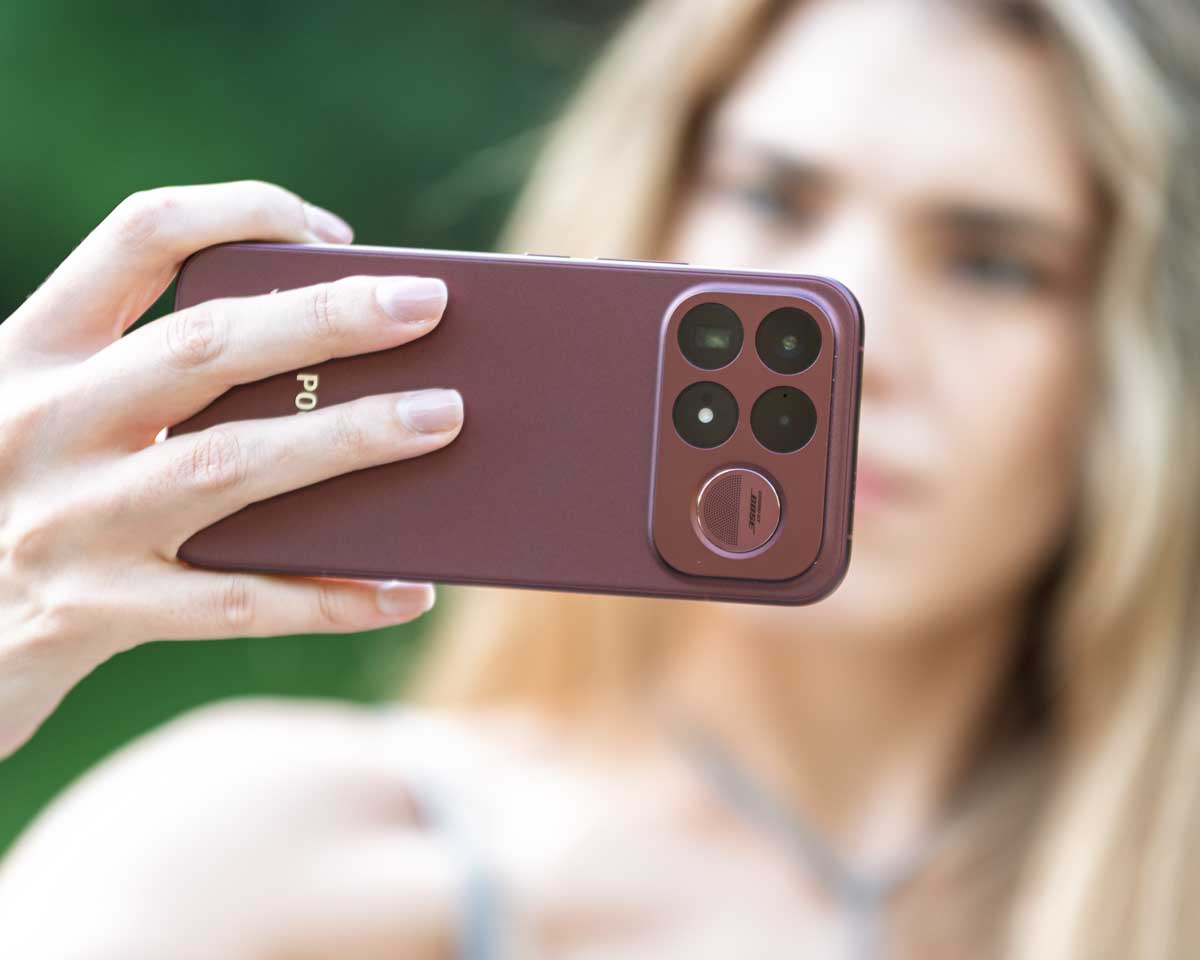

As a photographer, of course there are a few accessories that are must-haves for me and a smartphone like this. A 7×5″ Genaray RGB LED panel along with a SmallRig Metal Cold Shoe Smartphone Mount is perfect for getting a large amount of soft light and still being very mobile. If that 7×5″ light is too large, I also sometimes use a 5×2″ Pixel G1s RGB Video Light which fits nicely into a coat pocket. I’ll use a larger 12×12″ GVM 1200D LED panel on a light stand for some of my photography.
What’s in the Box
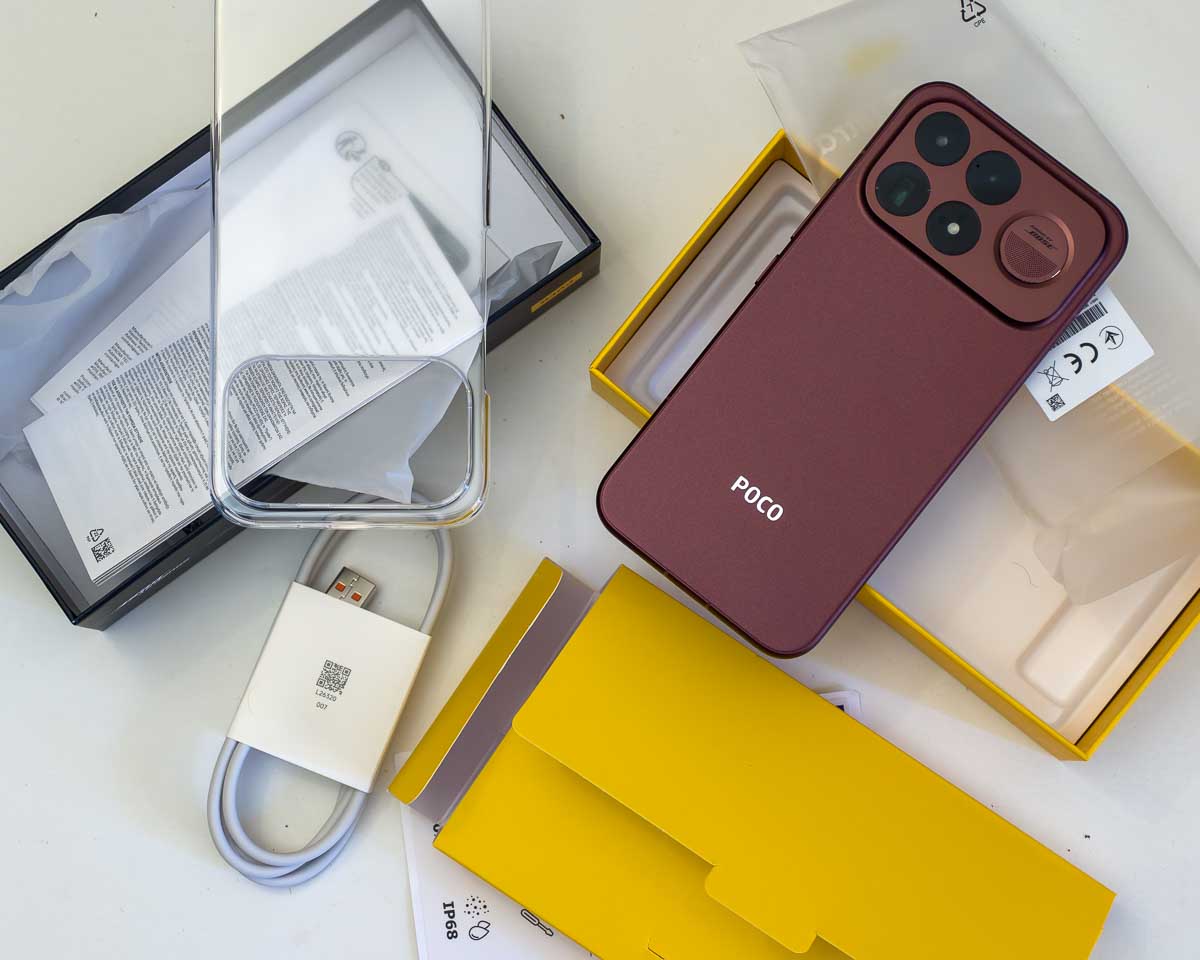
The POCO F9 Ultra comes with the phone itself, a USB-A to USB-C charging/data cable, warranty/legal documentation, and a nice hard shell clear case. A charging plug adapter is NOT included, so you’ll have to buy that separately or use one that you already have or get USB-A power plugs installed in your house. The phone supports 100 watt wired charging and 50 watt wireless charging though, so if you want to take advantage of those crazy fast charging speeds, you’ll want to find a compatible charger. I’m using an old Xiaomi 120W charger from the Xiaomi Mi 10 Ultra and that works beautifully.

Specifications
For specs, the Xiaomi POCO F9 Ultra has:
- Performance
- Snapdragon® 8 Elite Gen 5 Mobile Platform
- 3nm manufacturing process
- Octa-core CPU
- 2 x Prime Core, up to 4.6GHz
- 6 x Performance Core, up to 3.62GHz
- Adreno™ GPU
- Qualcomm AI engine
- VisionBoost D8 Chipset
- 12nm manufacturing process
- Super resolution + Smart frame rate + Game HDR at the same time
- Dual-core Visuals
- LPDDR5X_9600Mbps + UFS 4.1
- 12GB+256GB / 16GB+512GB / 16GB+1TB
- LiquidCool Technology with 3D dual-layer IceLoop system
- WildBoost Engine
- Display
- 6.9″ 185Hz POCO HyperRGB AMOLED display
- Resolution: 2608*1200 POCO HyperRGB
- Contrast ratio: 5,000,000:1
- Refresh rate: Up to 185Hz
- Peak brightness: 10000 nits covering 1% display area | 4500 nits covering 25% display area
- HBM brightness: 2200 nits
- Typical brightness: 850 nits
- Minimum brightness: 1 nit
- Touch sampling rate: Up to 480Hz
- Instant touch sampling rate: Up to 4800Hz
- 12 bit color depth, 68 billion colors
- DCI-P3 wide color gamut
- DC dimming
- Original color PRO
- Pro HDR display
- Wet Touch display 2.0
- Xiaomi Vision Care
- HDR10+, Dolby Vision®
- TÜV Rheinland Low Blue Light (Hardware Solution) Certified | TÜV Rheinland Flicker Free Certified | TÜV Rheinland Circadian Friendly Certified | TÜV Rheinland Intelligent Eye Care Certified
- Corning® Gorilla® Glass 7i
- Camera
- Rear Camera
- 200MP main camera
- Aperture: f/1.68
- 2µm 16-in-1 Super Pixel
- 6P lens, 24mm equivalent focal length
- OIS
- 50MP periscope telephoto camera
- Aperture: f/3.0
- 120mm equivalent focal length
- OIS
- 50MP ultra-wide camera
- 17mm equivalent focal length
- Aperture: f/2.4
- 200MP main camera
- Front Camera
- 32MP front camera
- Rear Camera
- Audio
- Symmetrical stereo speakers with an independent subwoofer | 3-Mic array
- Hi-Res & Hi-Res Audio Wireless certification, Dolby Atmos®, Sound by Bose
- Battery & Charging
- 8050mAh (typ) battery
- 100W wired HyperCharge
- 50W wireless HyperCharge
- Up to 27W wired reverse charging | Up to 22.5W wireless reverse charging
- USB Type-C charging port
- USB 3.2 Gen 1
- Supports QC2 / QC3 / QC3+ / PD2.0 / PD3.0 / 100W PPS
- Smart charging
- Connectivity
- Dual SIM (nano SIM + nano SIM or nano SIM + eSIM, eSIM + eSIM)
- Supports 5G/4G/3G/2G
- 5G SA: n1/2/3/5/7/8/20/28/38/40/41/66(70M)/77/78/26/48
- 5G NSA: n1/3/5/7/8/20/28/38/40/41/66(70M)/77/78
- 4G LTE TDD: 38/40/41/42/48
- 4G LTE FDD: 1/2/3/4/5/7/8/18/19/20/26/28/66(70M)
- 3G WCDMA: 1/2/4/5/8
- 2G GSM: 2/3/5/8
- Supports 4×4 MIMO
- Wireless connectivity
- Bluetooth 6.0, Dual-Bluetooth
- Wi-Fi Protocol: Wi-Fi 7 / Wi-Fi 6 / Wi-Fi 5 / Wi-Fi 4 and 802.11a/b/g/n/ac/ax/be
- Design
- Dimensions: 163.49mm x 77.94mm x 8.74mm
- Weight: 235g
- Colors: Dark Cherry / Black
- Others
- Powered by Xiaomi HyperOS 3
- IP68 dust and water resistance
- Supports NFC
- Ultrasonic in-display fingerprint sensor
- AI Face Unlock
- Xiaomi Offline Communication
Pricing:
- POCO F9 Ultra
- 12GB + 256GB:
- USD: $799 (Early Bird: $729) | EUR: €1,099.9 (Early Bird: €829.9)
- 16GB + 512GB:
- USD: $949 (Early Bird: $799) | EUR: €1,199.9 (Early Bird: €899.9)
- 16GB + 1TB:
- USD: $1,199 (Early Bird: $1,059) | EUR: €1,399.9 (Early Bird: €1,199.9)
- 12GB + 256GB:
- POCO F9 Pro
- 12GB + 256GB:
- USD: $699 (Early Bird: $649) | EUR: €899.9 (Early Bird: €739.9)
- 12GB + 512GB:
- USD: $769 (Early Bird: $699) | EUR: €999.9 (Early Bird: €799.9)
- 12GB + 256GB:
Hardware
Let’s take a look at the new design and formfactor of the Xiaomi POCO F9 Ultra.
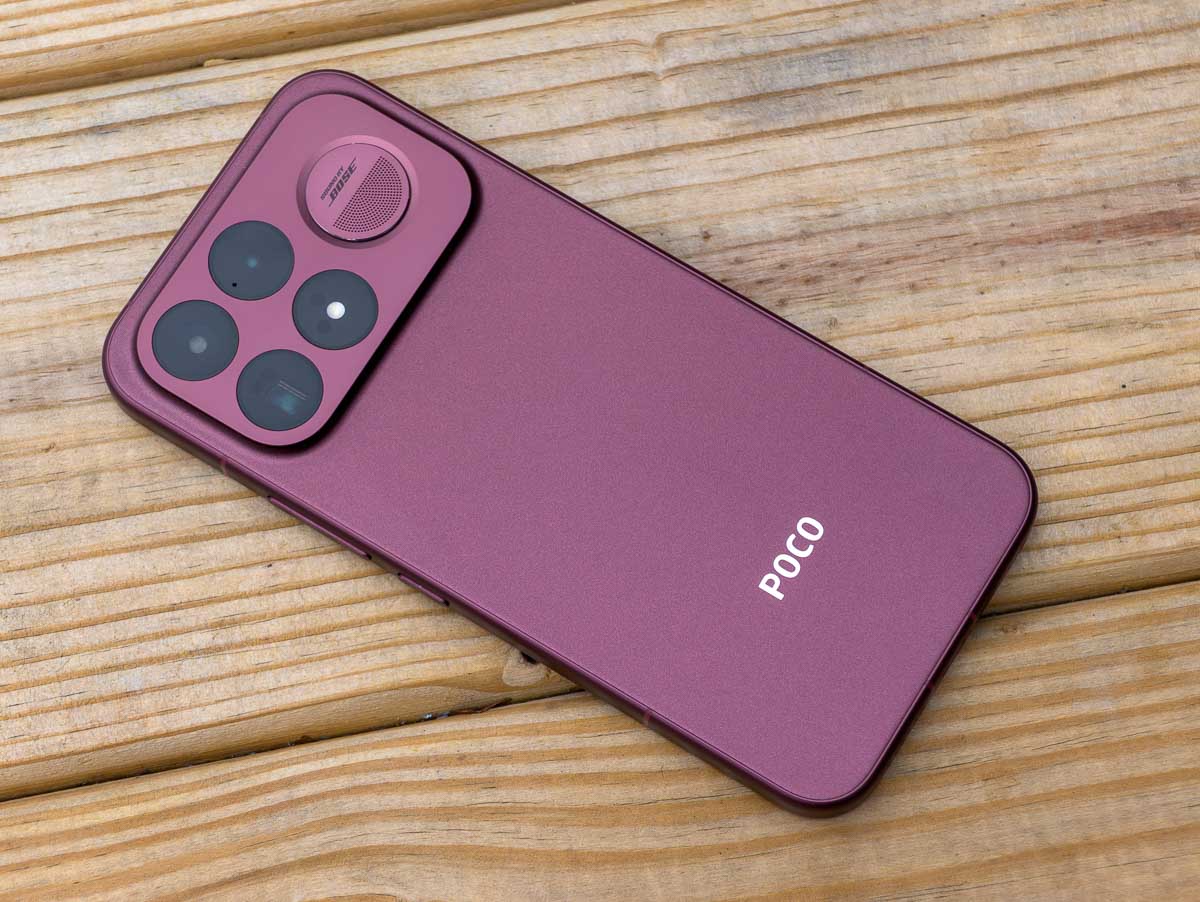

The burgundy “cherry red” color on our version looks amazing. It will also be available in black. That big circle next to the camera array has a Bose logo on it along with speaker grill holes, and… whoa, the Bose sound quality on this phone is amazing! It’s not going to be as good as a real stereo setup for audiophiles, but it definitely sounds better than other smartphones.
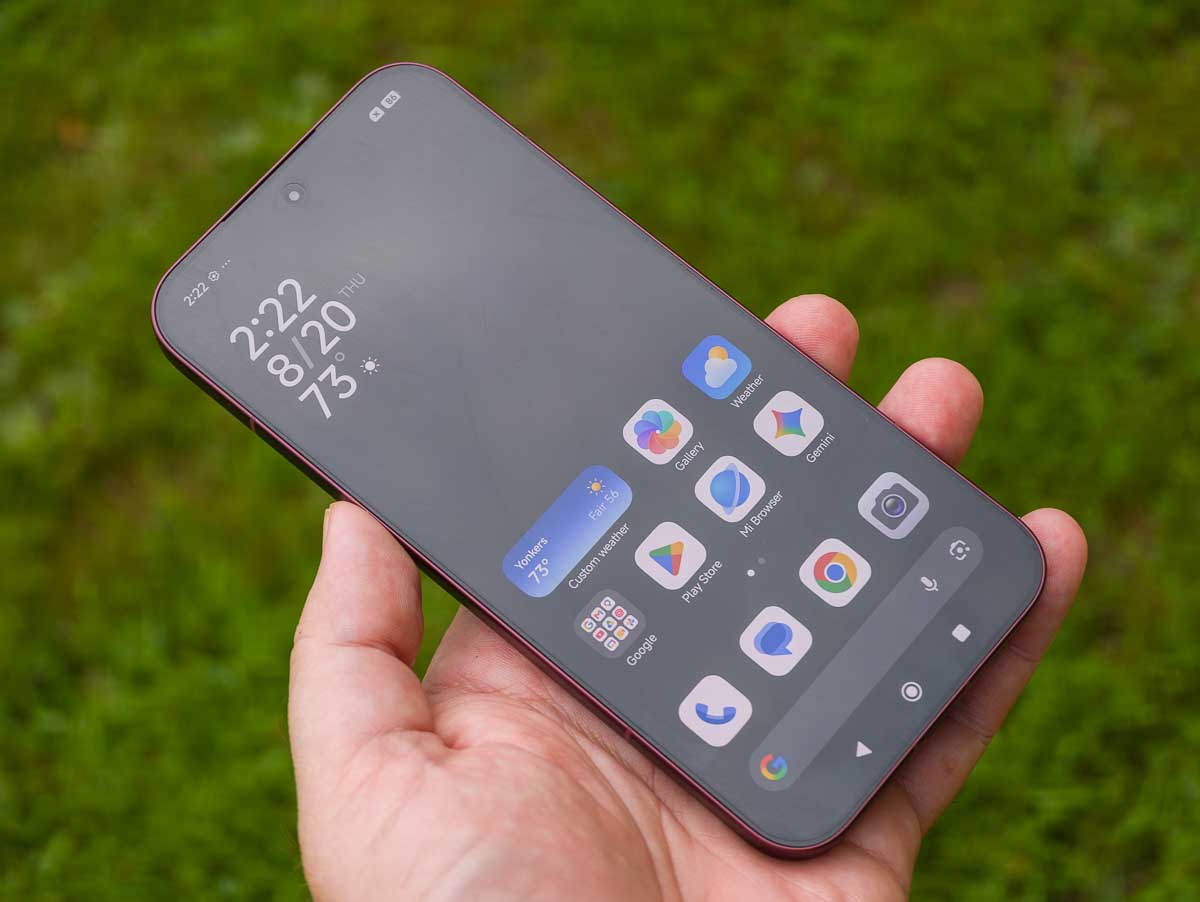
The display is perfectly usable outdoors. It has plenty of brightness to compete against full on sunlight, but reflections do make the screen get a bit washed out sometimes.
The display corners are very very rounded now just like the Xiaomi 17 Ultra. That means the top edge notifications area and the bottom edge navigation area take up a lot more vertical space than if the corners were sharper. Plus, things like remote desktop access have less area or else functions get covered by the huge corner radii.
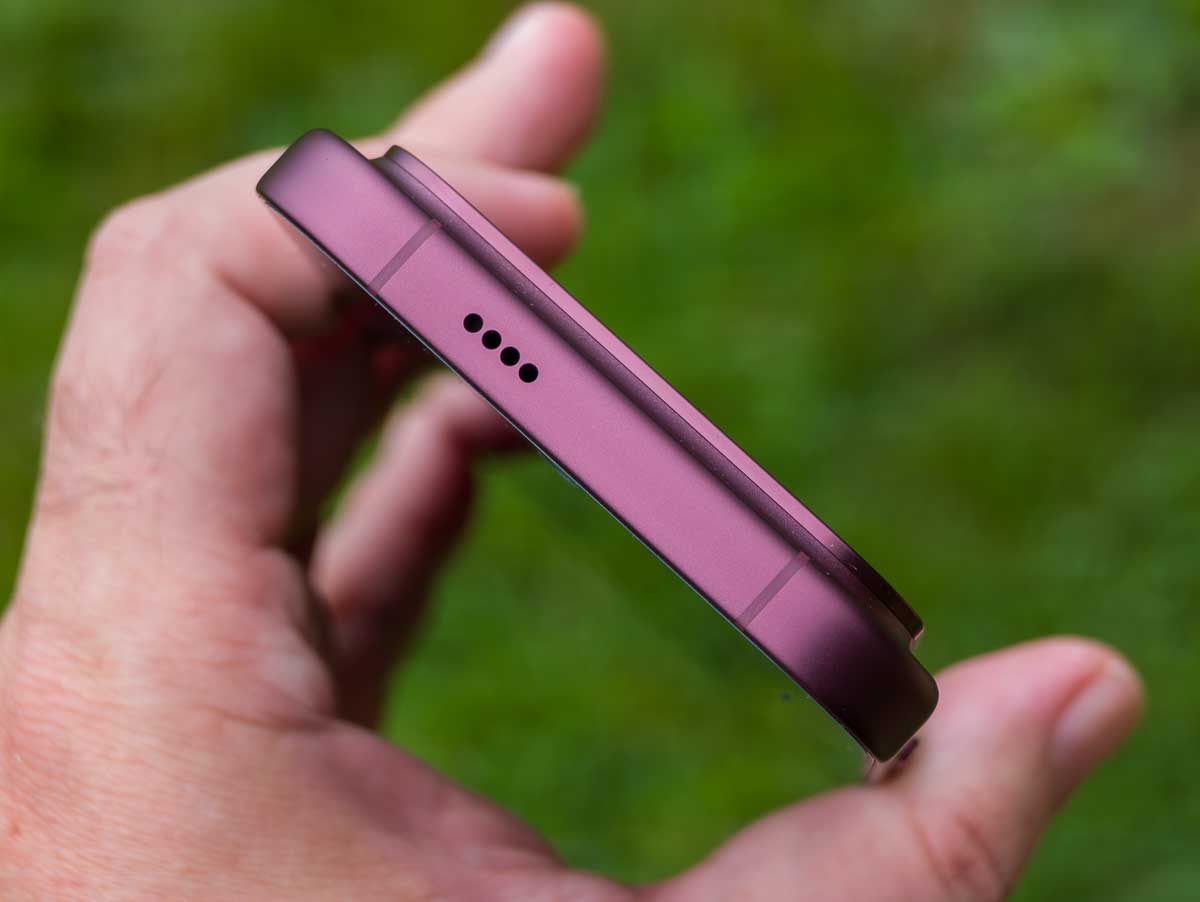
The top edge is smooth metal with 4 holes for the speaker and two visible lines that function as antenna spacers.
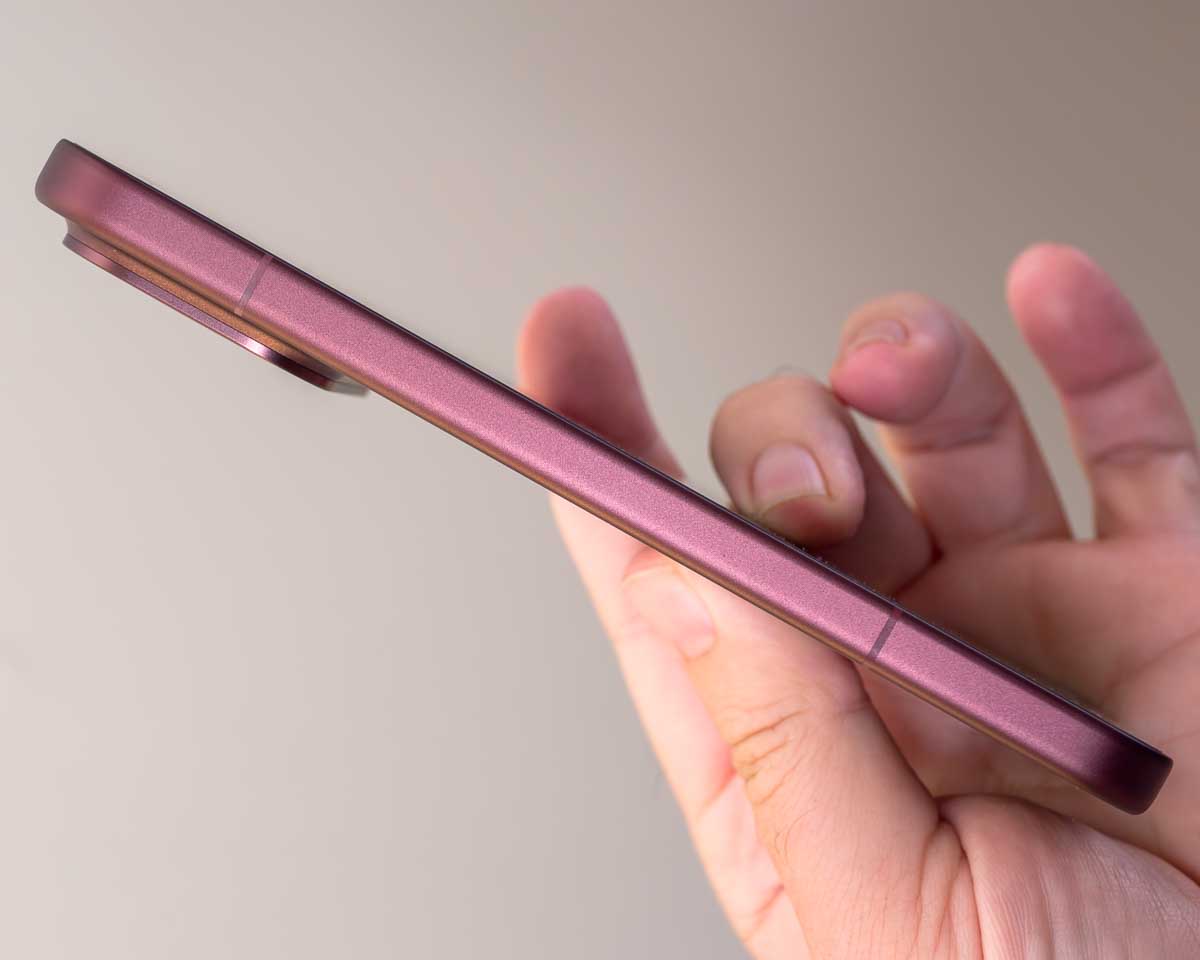
The left side is also completely smooth metal with some more antenna spacers.
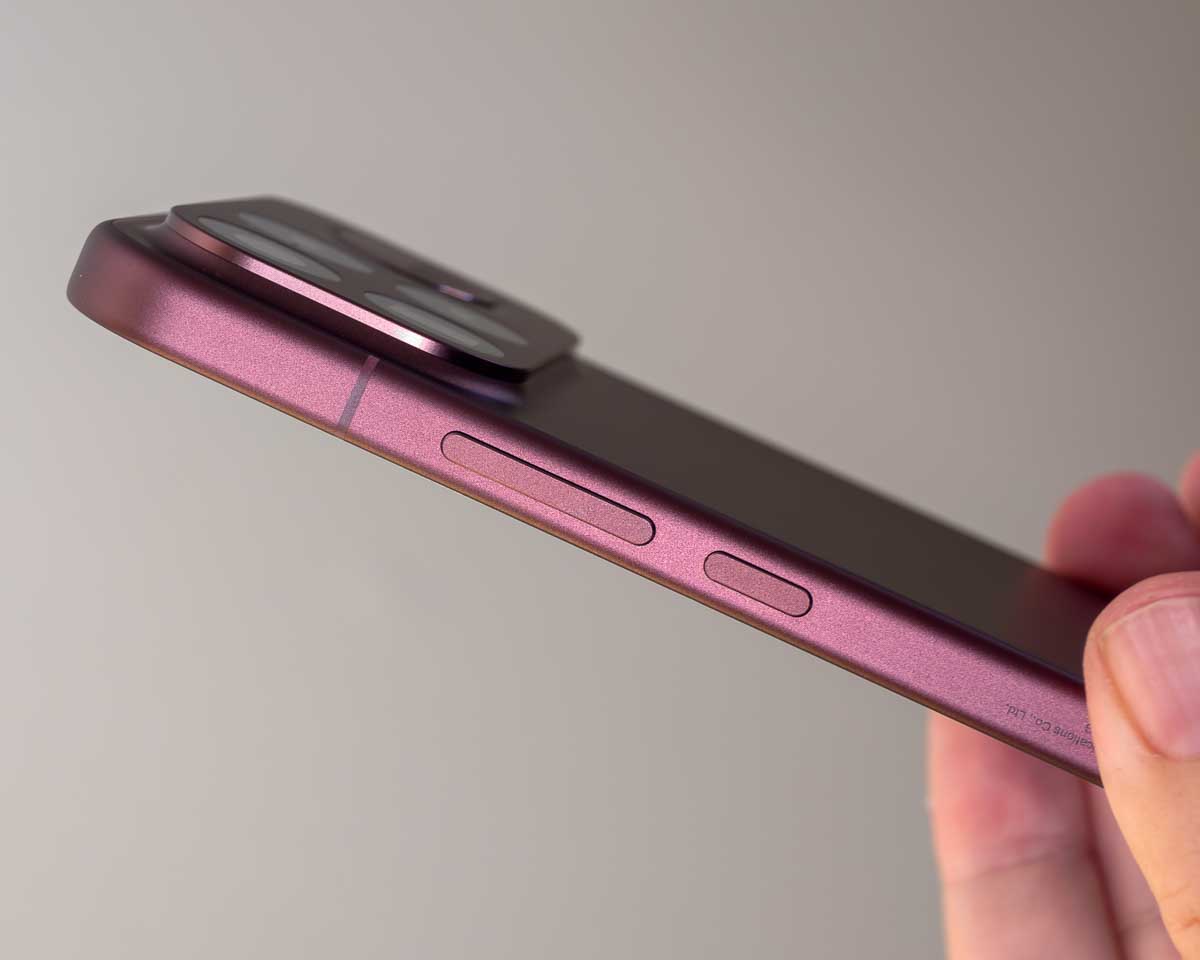
On the right side we’ve got the usual volume up/down toggle buttons as well as a power button. Unfortunately, the power button is now assigned to launch Gemini though, so turning the phone off is much more difficult now.
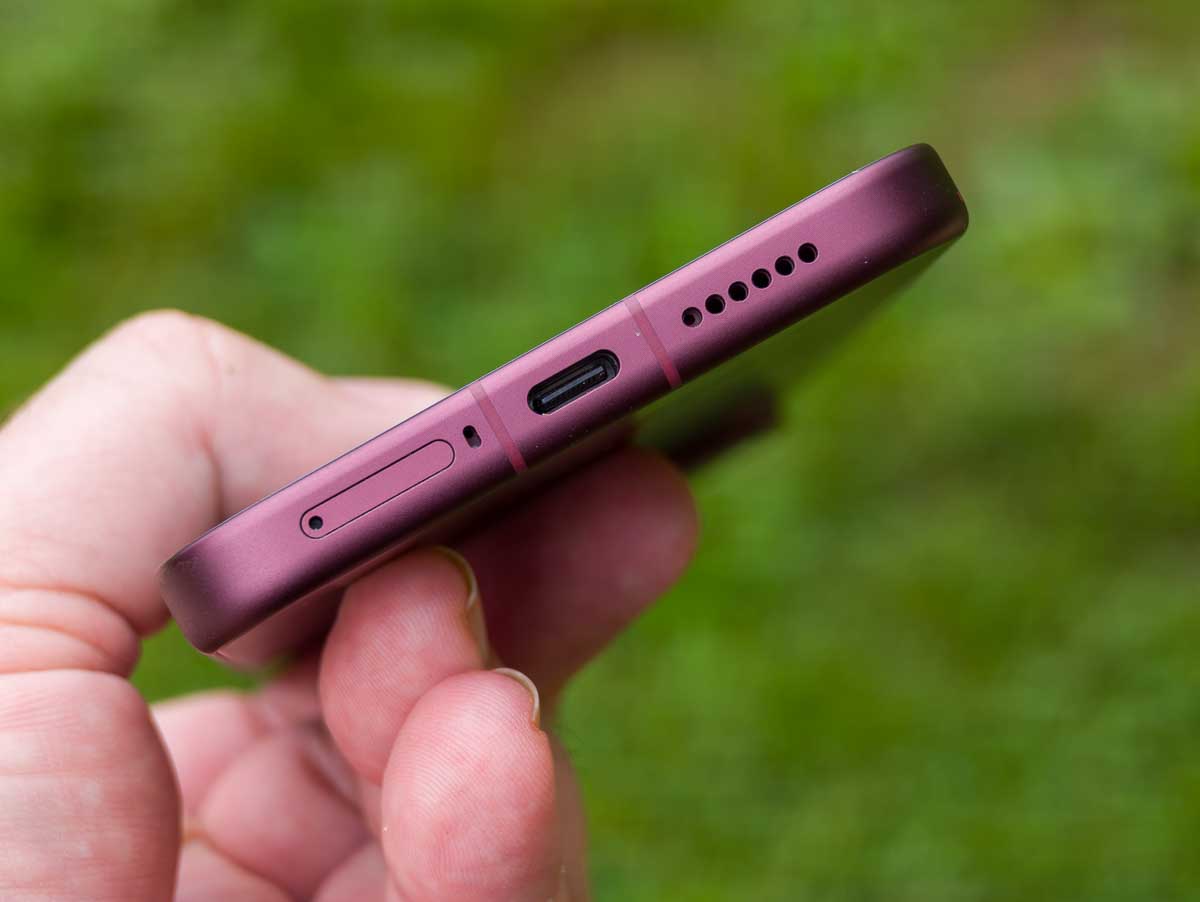
The bottom edge is where all of the Xiaomi POCO F9 Ultra’s holes and ports are. You’ll have the SIM card tray here, a microphone hole, the USB-C charging/data port, and speaker grill holes on this panel.
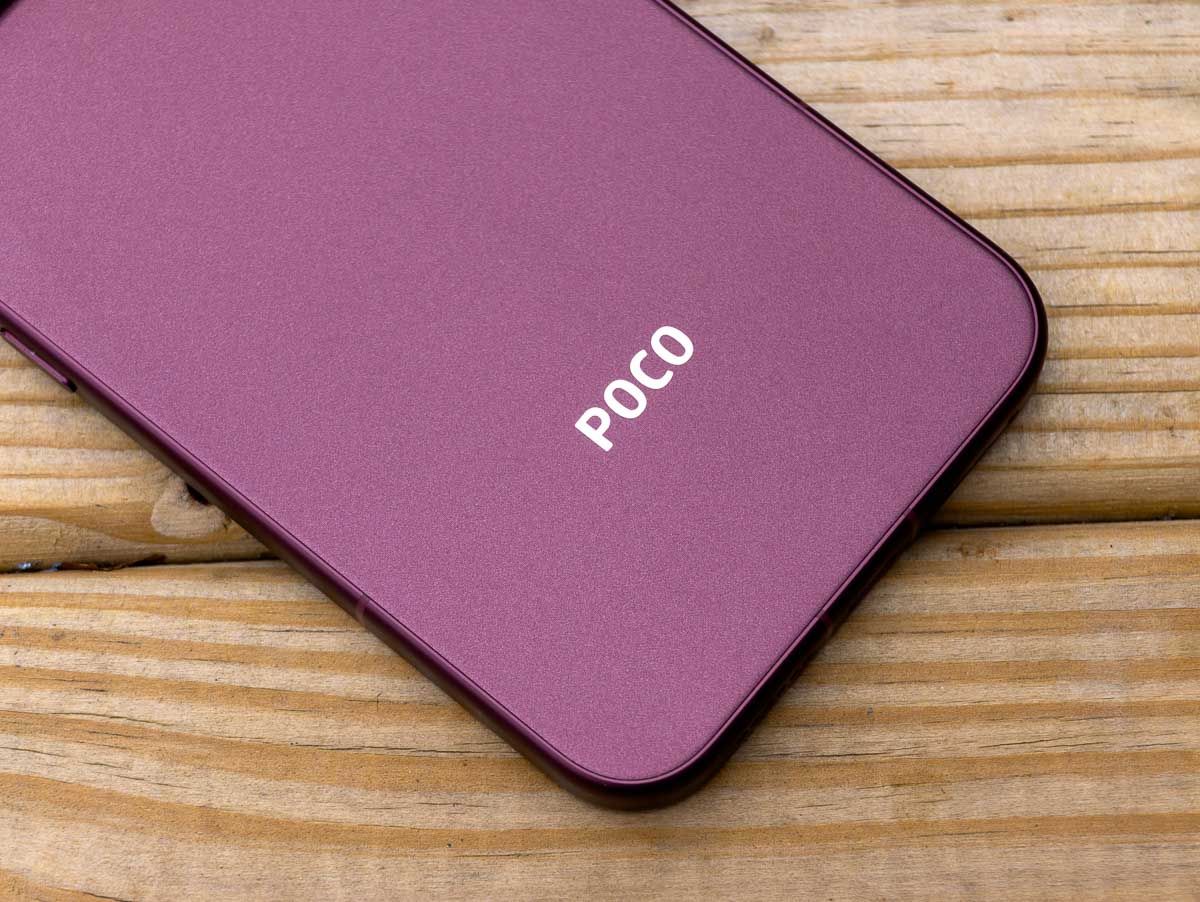
We’ve got some branding on the back with a shiny silver POCO logo in the middle.
Cameras
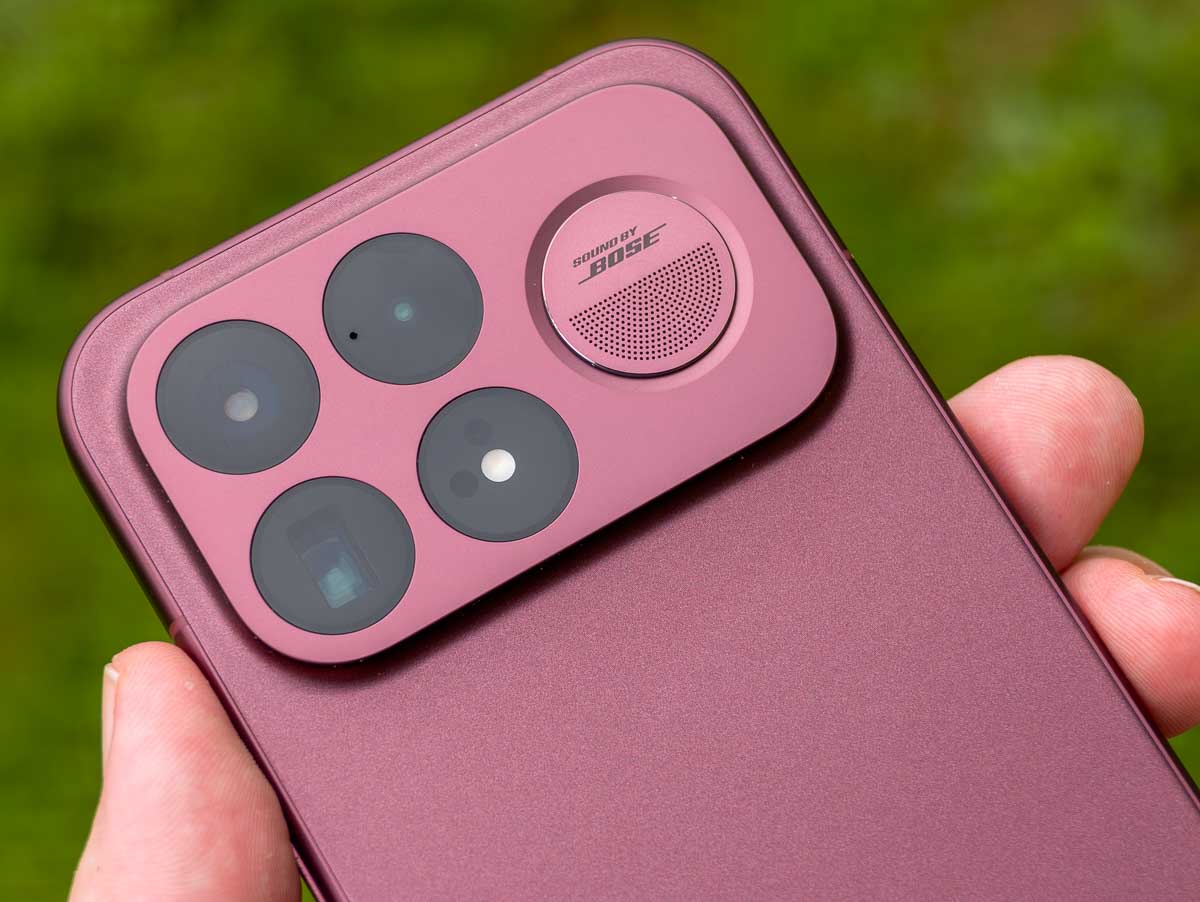
If you’ve been following our reviews, you’ll know that I’m all about the cameras on smartphones. So this is where I’m probably going to be most critical. But I’m happy to say that the POCO F9 Ultra’s camera array is a huge improvement over last year’s POCO F7 Ultra that I also reviewed.
First of all, the three cameras on the rear of the phone now all have the option to output to RAW DNG files which is a fantastic update. All of them can output to 12.5mp RAW format, while the 24mm main camera can also output to 50Mp RAW format. However, none of the cameras save any “Lens Name” metadata at all, so I’ll have to filter by focal length in my RAW photo editing software.
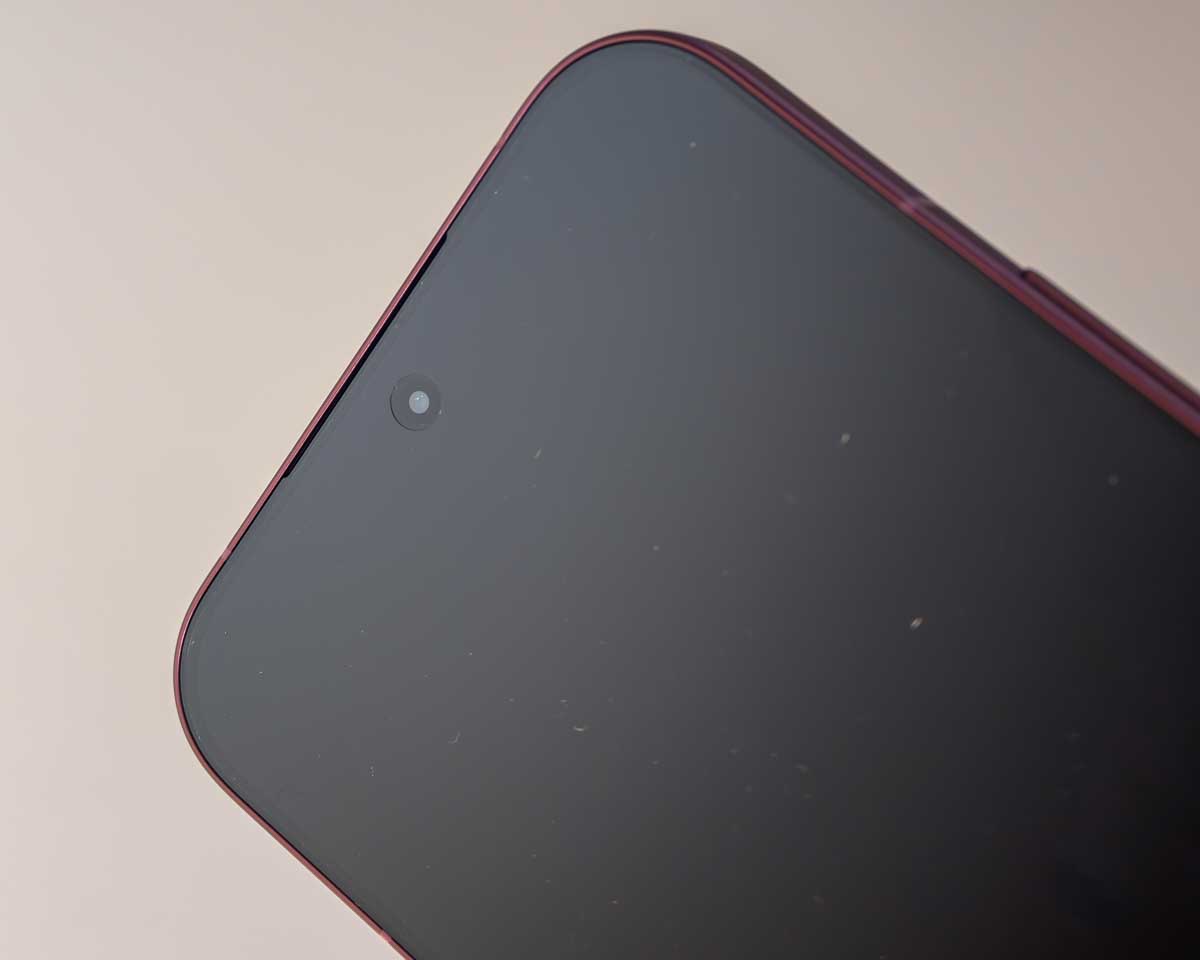
The front facing 32Mp camera does NOT output to RAW DNG format still, but… guess what… all cameras on the Xiaomi POCO F9 Ultra actually follow the Android Camera APIv2 specs properly which means I can use 3rd party camera applications like OpenCamera to generate RAW DNG output from all cameras. This is much better than the Xiaomi 17 Ultra which barely works at all with 3rd party camera apps.
120mm equivalent 50Mp telephoto camera
Below are some sample photos from the 5X telephoto periscope lens and camera combination on the POCO F9 Ultra.








I like the 120mm lens camera combination a lot. It’s very similar to the 120mm lens that I loved on the Xiaomi Mi 10 Ultra from years ago, but with better resolution. I’ve gotten some great portraits with it, concert photography, and even macro photos of butterflies.
The thing that I don’t like about the 120mm telephoto camera is that it’s an extreme jump from the next closest 24mm focal length camera. Since the POCO F9 Ultra only has 3 cameras, there’s no in-between focal length when shooting RAW. I miss the 60-75mm focal length range that some other phones have with their 4 cameras.
Fake background blur (portrait mode)
Usually the “portrait mode” fake background blur filters on smartphones look extremely fake. However, the POCO F9 Ultra seems to have the same AI driven computational photography processing system that the Xiaomi 17 Ultra has, which can be extremely good at simulating realistic narrow depth of field.




If you look at the photo right after taking it, the background blur filter might show some very bad filtering & masking errors, but if you wait some seconds or don’t look at it for a while, the mistakes disappear. It’s probably being processed in the background to get the beautiful, detailed hair masking done right and I kind of love it. I only wish that the portrait filter could have been applied in a non-destructive manner as part of RAW DNG files. Currently, I have to choose the aperture simulation level and bokeh style before taking a shot and it’s saved as a compressed JPG only. I wish there was a setting where the output could be DNG and the filter settings would be saved procedurally. For example, Adobe Camera Raw has a similar filter that is applied non-destructively and who’s settings are saved within the DNG file metadata (although their masking and depth estimations are not as good at the moment).
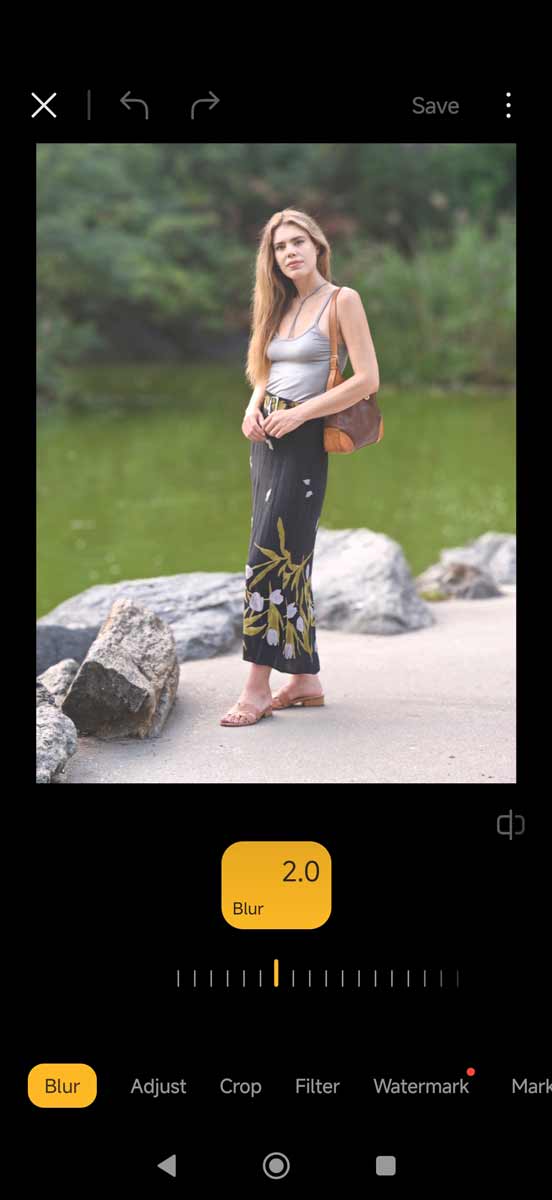

To be fair, the newest Xiaomi photo Gallery app on the POCO F9 Ultra (and other Xiaomi phones) does have a Blur editor feature that lets you change the level of background blur in existing photos, but it doesn’t work as well as the Portrait mode created when taking the photo. The editor’s edges are not as accurate and tiny flyaway hair details will get lost.
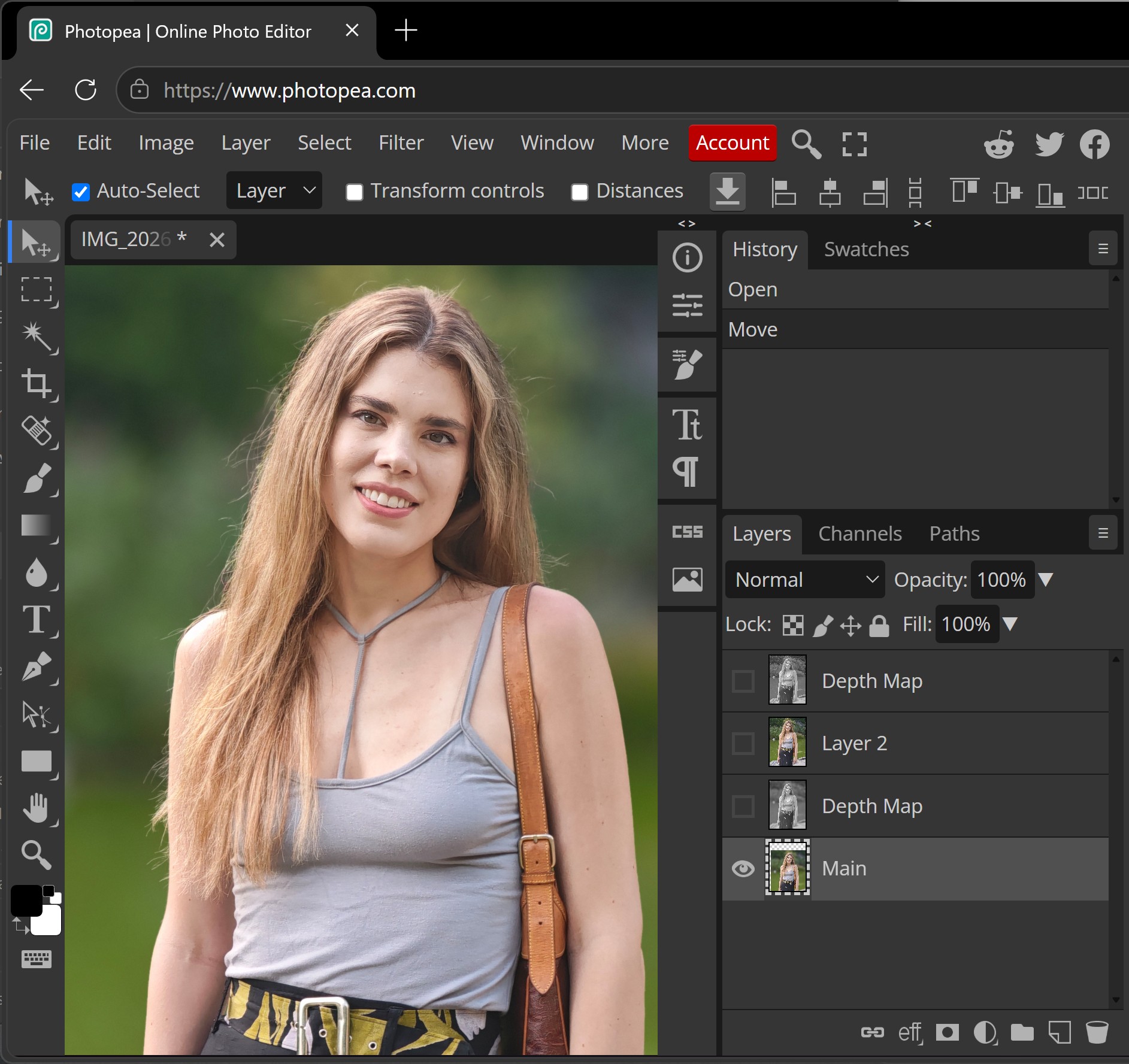

The JPGs generated in portrait mode do contain the original photo plus a couple greyscale channel images used to create the background blur. Photoshop cannot access the original image layer, but Photopea can. Photopea can also save the JPG as a PSD file that retains the image layers so that you can access the original unfiltered JPG along with the “depth map” layers (which aren’t really depth maps; just greyscale versions… a real depth map would have the closest pixels be white and the furthest pixels set to black).
The detail in the hair when the portrait mode does the simulated narrow depth of field bokeh correctly is pretty amazing.
24mm Main Camera
The 50Mp 24mm “1x” main camera is the only one that outputs to 50Mp RAW DNG files. All of the others only output 12.5Mp pixel-binned RAW files. So this is the only real 50Mp camera on the Xiaomi POCO F9 Ultra, but it’s also labeled as a 200Mp camera. Sure, the hardware technically has 200Mp, but it’s probably pixel binned in hardware down to 50Mp.




The 24mm 1X main camera definitely isn’t as great as the main camera on the Xiaomi 17 Ultra, but it’s still very good. The sensor isn’t as large as the 1″ sensor on the Xiaomi 17 Ultra, so we’re going to get more noise especially in low-light photos, but we’re still getting decent dynamic range. Though, in the concert photo above we lose the highlights and shadows so certainly the dynamic range could be better.
I recommend shooting RAW here because the JPGs are noticeably processed with sharpening and exposure adjustments that might cause too much contrast. The RAW output does look like the focus is a little soft however, so some post process sharpening is probably a good idea.
200Mp photo mode
The specs say that the 24mm equivalent main camera has a 200 megapixel sensor, but that’s binned to 50Mp in the real output. However, there is a 200Mp mode that creates a JPG image that does include 16320×12288 pixels of data, but if we look closely it looks extremely processed.


The 200Mp JPG looks very processed zoomed in. That’s not a clean 200Mp image. It looks like it was upsampled. The 12.5Mp pixel binned images are extremely clean, detailed, and sharp. I don’t think they need to be upsampled to 200Mp afterwards at all.
In the dedicated 200Mp camera mode you’ll notice a very slow animation blocking and rendering different rectangular areas of the image over time. This indicates that it’s not just taking the photo, but calculating it. In the Pro camera mode, you can only set the format to 50Mp DNG which does NOT include the processing animation.
While the upsampled image quality is fine, it looks like an AI upsampling image diffusion model may be being used… the fact that it takes so long to process leads me to believe that it’s not worth using. You can’t output to RAW for further editing anyway and there isn’t a significant amount of actual detail to gain, but there is a lot of speed to lose.
17mm Ultra-Wide Angle Camera
While I really miss the 12mm ultra-wide angle lenses from previous Xiaomi Ultra smartphones, the 17mm is still ok. I much prefer the very ultra wide angle lenses. Still, it’s great to have more focal lengths to choose from.




The samples above look great at low quality web resolutions, but if you want better quality, I highly recommend shooting with the 12.5Mp RAW DNG output and editing later with professional grade Camera RAW editing software. In JPG mode, the processing tries to increase the dynamic range and will often add halos around the edges of trees and such. In RAW format, you’ll get more noise, but you’ll have much more control over the detail and exposure in a different post processing program.
32Mp Front facing camera
The front facing camera is an average 32Mp sensor. Thankfully, I was able to get RAW output via the OpenCamera app and the Google Camera APIv2 which often doesn’t work on other phones. The front facing camera has a 22mm lens which is nice and wide, but it will often auto-crop to a 27mm view depending on the subject. It’s important to carry a lens cleaning cloth for the front facing camera as well, since it’s in a position which gets fingerprint grease all over it very often and that will affect the quality of the front facing camera photos.




Video
The video recording capabilities on the Xiaomi POCO F9 Ultra are comparable to the Xiaomi 17 Ultra though certainly not as good. The POCO F9 Ultra does not have 120fps at 4K nor does it have Dolby Vision color mode support. You can get LOG mode however if you use the video recording option in the camera software’s Pro mode. LOG mode will give you more flexibility for color grading in professional video editors like Adobe Premiere Pro or Davinci Resolve, but if you don’t do any editing afterwards it will look grey and washed out, so only use that if you know what you’re doing.
One bug that’s annoying with the video recording software is if you’ve locked exposure levels at a specific area and then you use the photo button while recording, the exposure settings reset while the video is still recording.
Software
When it comes to the rest of the software on the Xiaomi POCO F9 Ultra, we’ve got the latest Xiaomi HyperOS 3 as the operating system which has some excellent improvements over HyperOS 2.
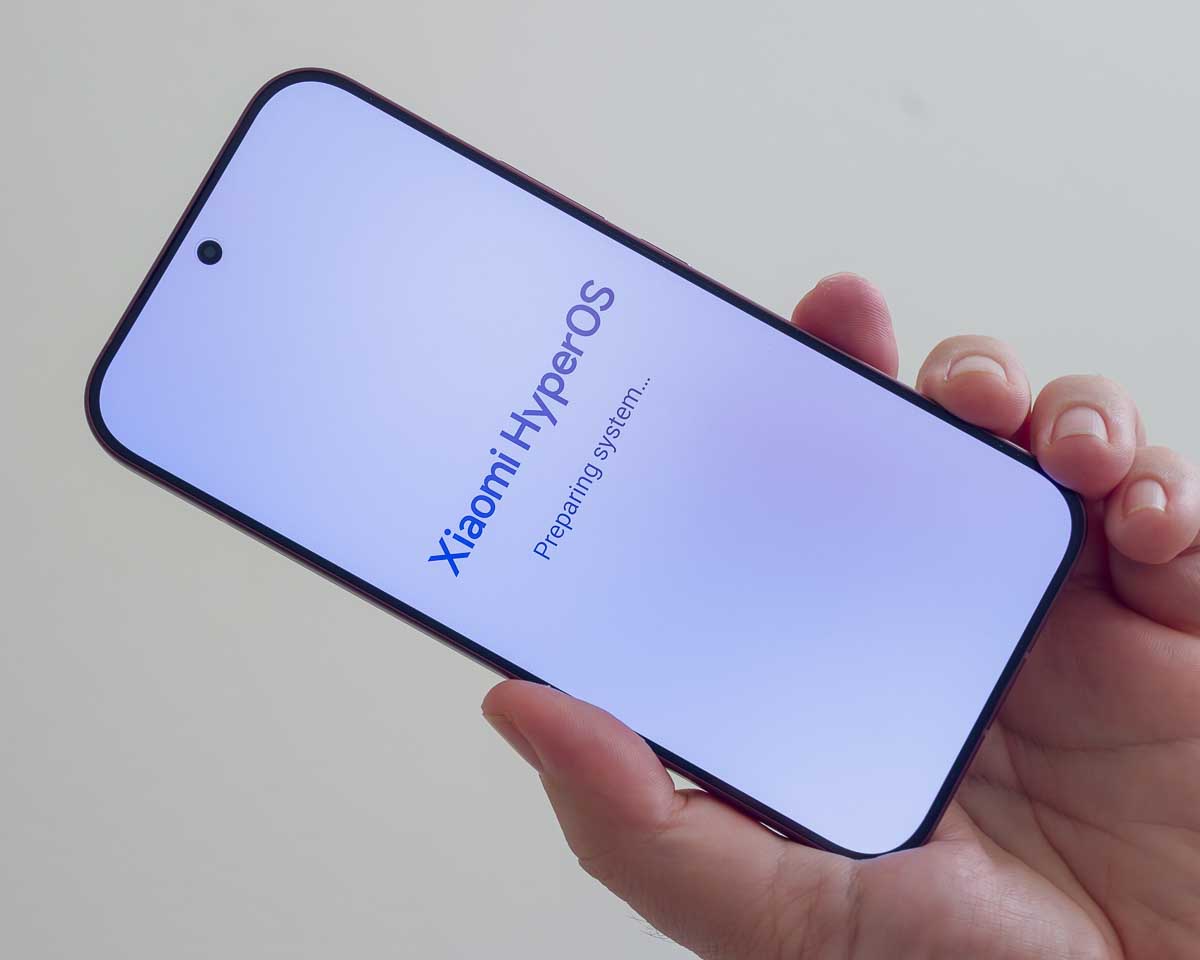
This is the HyperOS 3.0.305 Global ROM with Android 16 so we’ve got more western apps bundled as opposed to the Chinese ROM that’s much more customized for use in China. It includes most of the Google apps by default, plus things like Facebook, Netflix, Amazon Music, Prime Video, and TikTok, but AliExpress, Mi Browser, Xiaomi Home, Mi Mover, and Xiaomi’s Notes, Calendar, File Manager, Security, Music, Clock, Calculator, Scanner, Compass, Mi Remote, and Recorder are still there. The Recorder does not include an automatic phone call recording option like the Chinese version does and the Mi Remote actually works with my TV.
Battery Life
The 8050mAh battery is pretty fantastic. Obviously, your mileage may vary based on usage and the life of the battery will reduce as it gets older, but in the first weekend of use with lots of photos and video recording, I got well over 48 hours of battery life. I charged it Friday and it’s only got into suggesting battery saver mode halfway through Monday.
The POCO F9 Ultra supports 100 watt wired charging as well, so you can get the battery level back up to 100% very quickly. It does NOT come with a charger at all though, so you have 48 hours to buy one.
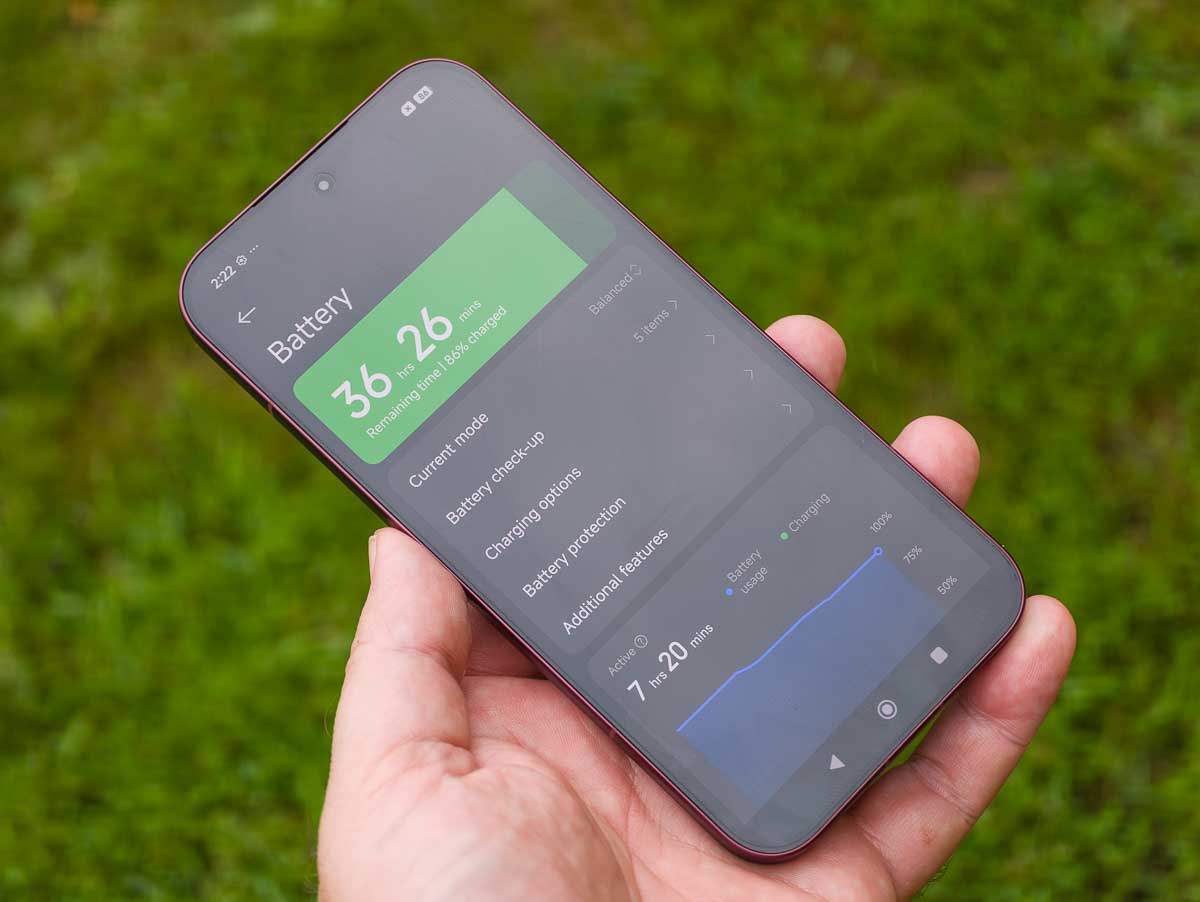
There’s 50 watt Qi wireless charging in the Xiaomi POCO F9 Ultra as well, and this is slower than the wired charging, but I’ve got a 55-watt Qi charger from Xiaomi that works beautifully for a bit more charging speed compared to the slow 15-25W charging from other devices.
Pros & Cons
Pros
- Loud and immersive Bose speakers
- Cameras can output to RAW DNG format and fully support Android’s Camera APIv2
- Portrait mode’s background blur filter detects and masks flyaway hair really well
- Double the battery life of many other phones
- Love the new Cherry Red color
- Reasonable pricing
- Feels sturdy with a premium build quality
- 185fps gaming performance
Cons
- Does not come with a charger
- Lens metadata is missing from the photos
- High radius rounded corners of the screen decrease usable area
Conclusion
Xiaomi’s POCO F9 Ultra is a big step up from last year’s F7 Ultra with a huge battery capacity increase and much improved camera system at a totally reasonable price range. The Qualcomm Snapdragon 8 Elite Gen 5 processor performance is just as impressive as it was on the POCO F7 Ultra as well as other modern smartphones with the same processor. I love that the new POCO F9 Ultra includes an improved camera array with RAW DNG output as well as full Camera APIv2 support and the audio by Bose is wonderful for watching movies and TV shows. If you’re looking for the best bang for your buck in an Android smartphone, I’d highly recommend the $730 early bird price for the POCO F9 Ultra. It feels like a much more expensive device.
Guest appearances by Brana Dane.
… reposted this!
… liked this!